

May was not a planning month. It was a doing month.
The team went to Czech Republic for ETH Prague. They came back with a story about a hacker space that built its own mortgage on Ethereum.
Then came the moment we’d been building toward: twenty locations around the world, all hosting Plural Events on the same day, each one deep in conversation about deliberate democracy.
ETH Prague
Nikoline and Lorenzo flew to Prague to represent the network at Ethereum conference - ETHPrague and to support The Commons Hub Austria (check out their new website! ) team who came with an installation and a talk of the Valley of The commons. Turns out developers love to see how new society concepts are applied on a real case like the Valley! I think there are still some spots left…


The venue was an art deco building in the center of the city. Four days. Not large enough to lose people in, not so curated that it flattened the edges. Team conclusion: Prague has a real community. Not a conference circuit. Builders who have been there long enough to have failed at things together, to know each other properly, to have made something they are proud of.
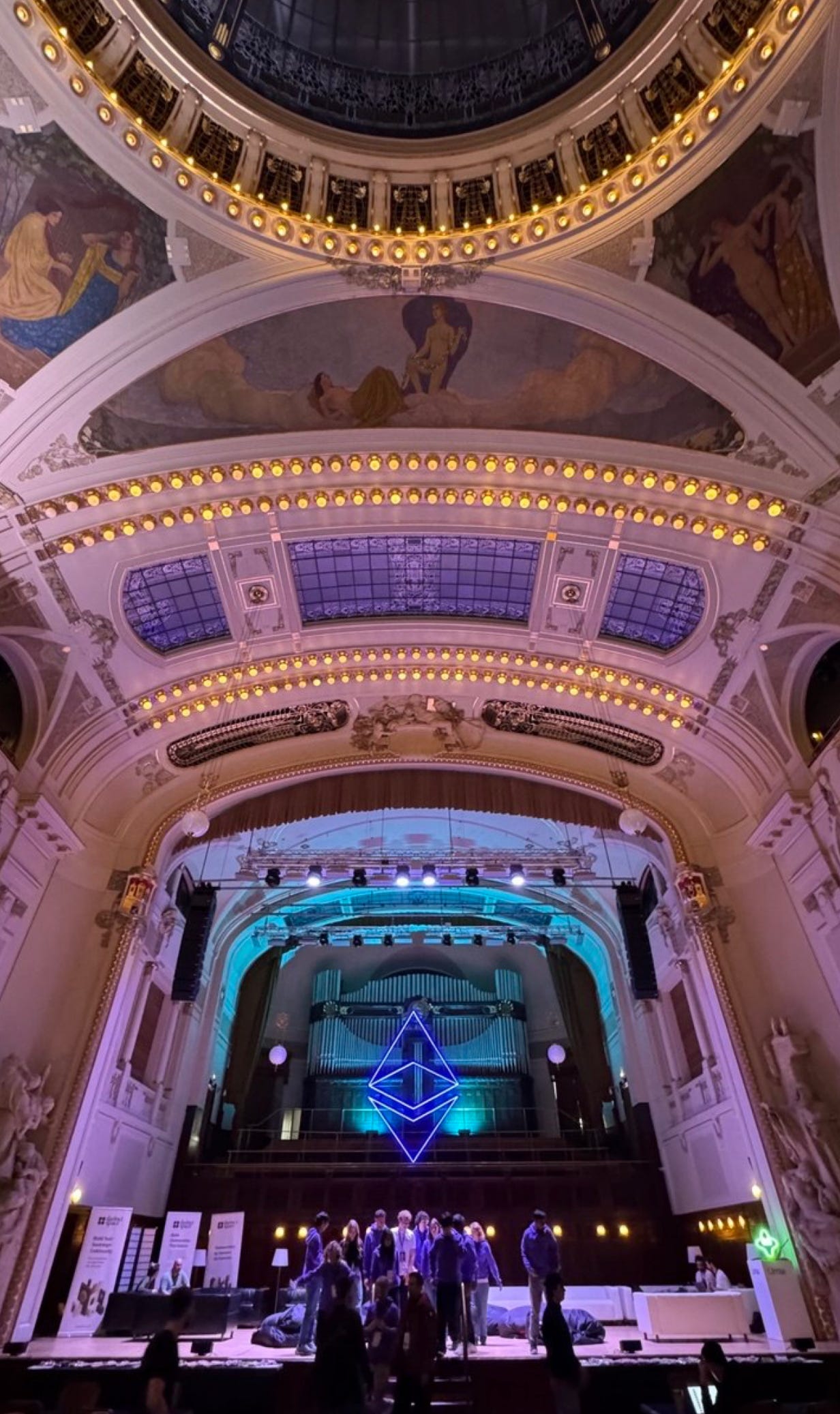
Nikoline shared that one moment cut through everything else.
At a panel called “The Decentralization Stack: Where Are We Still Lying to Ourselves?” Moderated by Migle for Swarm. Mario from Bordel made a point that had nothing to do with the technical agenda. He was talking about how many young people enter this space. Not through a whitepaper. Not through a YouTube rabbit hole. Through a physical room they walked into when they were teenagers.
“I came to the local hacker space and they had a mate for bitcoin. It cost me like 500 bucks today. But it was my first payment in bitcoin, and that’s how tangible it felt. That’s how I got into this place. Support your local spaces!” - Mario Havel
This is why we created Hubs Network. Tangibility is not a soft metric. It is the thing that converts someone from curious to committed. Hearing it said from the stage, to that audience, in that room, was its own kind of confirmation.
The rest of the conference was full of new connections, potential partnerships and good time with old and new friends.
The team came back with more leads than bandwidth. That is a problem worth having.
The Bunker and the Five-Year Bet
While in Prague, the HN team did not only attend sessions. They helped build something.
The day before the main conference opened, the team visited Bordel 2.0, a pop-up space where conference participants could ideate and hack on solutions for the upcoming hub. Cutting wood and prototyping a sunlight simulator. Figuring out how to make a place cozy. A bunker has no windows, so they are building their own light. True hacker spirit. That is the kind of collaboration that does not make it into a conference report but is the actual work of building trust across the network.
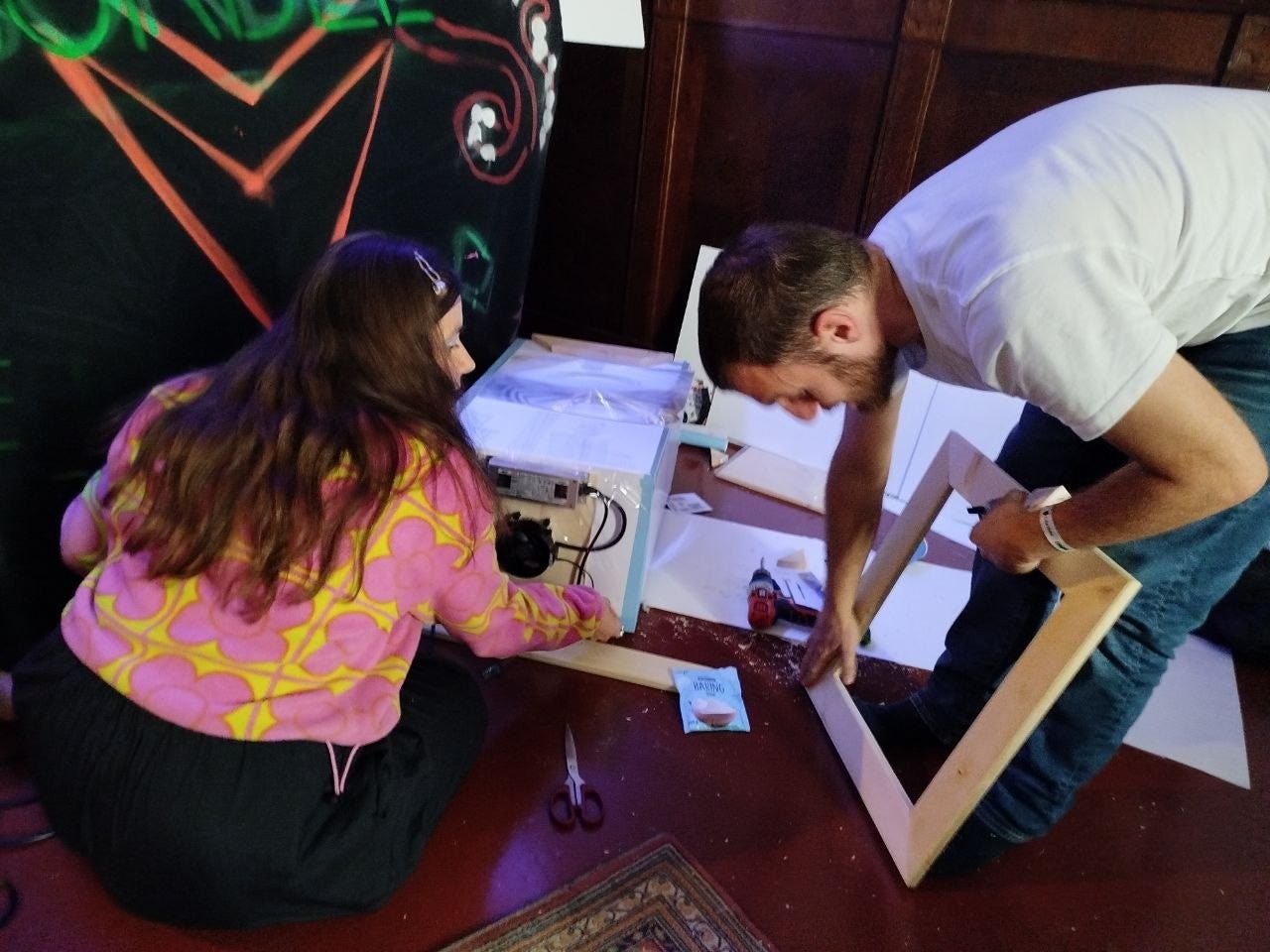
The Bordel story is worth telling in full, because it is relevant to every hub that has ever paid rent and wondered whether there was another way.
Six years ago, Mario and a group of locals found a dirty basement in Prague and turned it into Bordel hacker space. Not for aesthetics. It was messy, so they called it Bordel, and they used it for music and hacking and experiments in mycelium and semiconductors and whatever else needed a home. It became a layer: a place where people from different communities could come and make things. Small. Strange. But theirs.
Then they had to move out. The space got too small for everything they were concentrating there. When they started looking for somewhere new, they made a bold decision. Instead of finding another basement to rent, they decided to own.
Going to a bank was never realistic. As Joseph, the builder behind the financing protocol, shared: “We don’t go to a bank, we don’t go to a third party, we just program it ourselves permissionlessly on Ethereum.”
So they did.
The structure: crowdsource crypto collateral from within the community, wrapped ETH sitting in a shared wallet, yield-bearing. Find lenders willing to contribute USDC against that collateral. Deploy a smart contract that handles the loan terms, repayments, and liquidation conditions. No intermediary. All code open source.
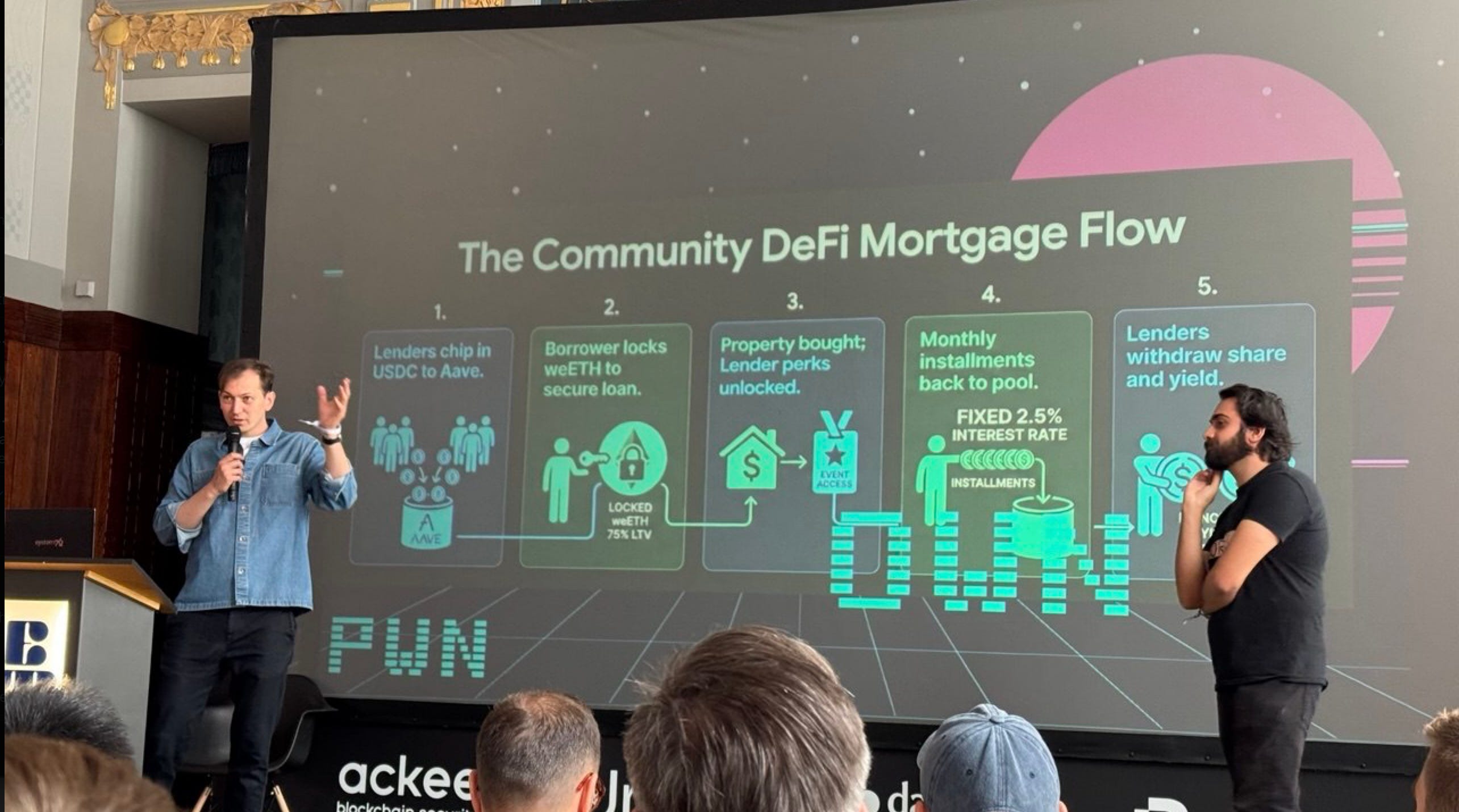
They needed 180,000 USDC. They set a deadline. Forty-seven people said yes. With thirteen hours to spare.
The terms: a five-year loan, monthly repayments, 5% fixed rate annually for lenders. Not a donation. Not crowdfunding. A loan that liquidates only if they stop repaying. The lenders get their yield. Bordel gets a hacker space with no landlord.
The new space is a bunker. Soviet-era air intake system with a chemical filter. A crawl shaft built into the structure. Two large rooms. Space that needs some hacking to make it cozy, but the potential is there. The team is building ZK proof membership for private access. A blank slate that is entirely theirs to design.
For any hub steward who has ever thought about the difference between renting and owning: the mechanism exists. The documentation for the loan structure is fully open source at loan.bordel.wtf.
Plural Events: Twenty Cities, One Question
While the Prague trip was happening, something else the network had been building for months came together.
Twenty locations. One day. The same question asked in different languages, in different rooms, on different continents.
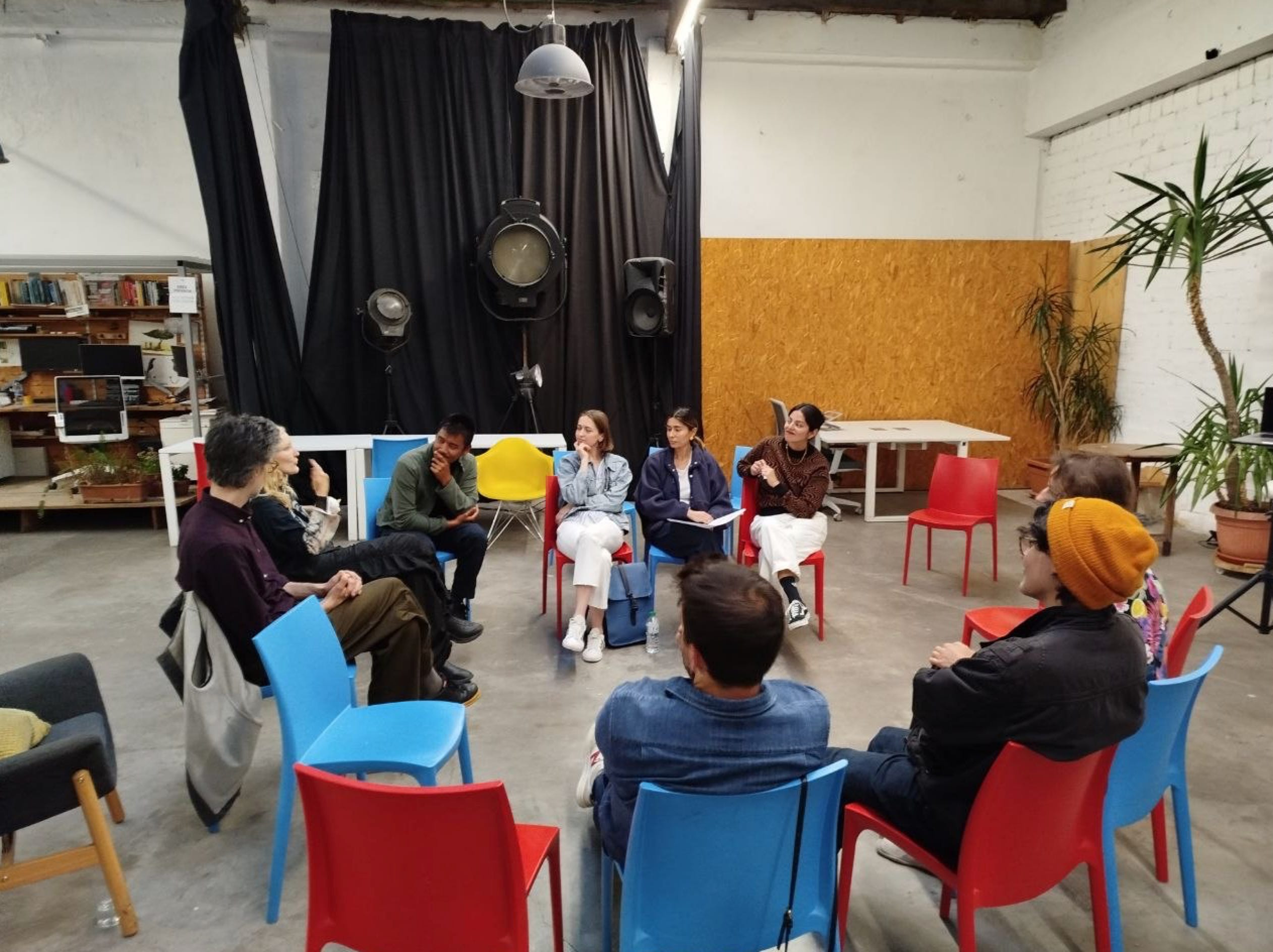
This month’s Plural Events were the largest coordinated effort the network has run to date. The topic: Deliberate Democracy, the role of Privacy and local challenges. Organized in partnership with Web3 Privacy Now, RadicalXChange, Logos, Comms Gardening , Dembrane, and Medulla city, the series brought hubs and community spaces into simultaneous conversation across the world.
Some of what made it work was planned. Much of it wasn’t.
Nikoline, who coordinated from inside it: “Such beautiful moments in the run-up to the Plural Events. Spontaneous sponsorship from Zaal who interviewed us a few weeks back , and gestures by Dan at the Network school, to pass on the reimbursement to other events that needed it more. Collaboration brings a bit of coordination with it, but has helped so much in terms of reach and amplifying the message.”
The content from all twenty sessions is now being gathered and analyzed. It is heading to Berlin. On June 14, the Web3 Privacy Now Summit will host a panel pulling the threads together: twenty separate rooms, one shared question, surfaced in front of a new audience. There is still work ahead on the panel design. It will be an interesting conversation for people who have not been following this thread. The hope is to see you there.
Thank you to everyone who made this possible.
Kris and the Logos team, for the infrastructure and hands-on support that held the whole coordination together. PG and Mykola from Web3 Privacy Now, for the sponsorship and consistent presence throughout. Beth and Bastin, for organizing and hosting the Berlin event. Jess and Jack from RadicalXChange, for being part of this from the beginning. Dembrane, for providing us demo to use their tool that captured what happened in those rooms so it could travel further. Zaal for his generous sponsorship, and Dan, currently residing at the Network School, whose pay-it-forward contribution covered venue costs for events that could not have run otherwise.
And to everyone who showed up, ran a local event, or quietly made sure someone else could.
Running the hub? Reach out :hello@hubsnetwork.org